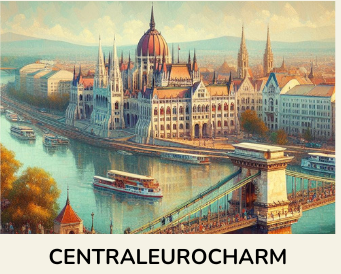
A Long-Awaited Family Reunion in Europe
A year ago, while working on my CentralEuroCharm website, I called to chat with my oldest sister in Mongolia and talked about creating an online business which promotes travel to Central Europe. Shortly after, she shared wonderful news — she and her daughter were planning a family reunion with me. My niece had been living in the Netherlands since 2001, and I hadn’t seen her in twenty years.
My oldest sister Dora, has always been the quiet heart of our family, keeping everyone connected. In early September, Dora flew from Mongolia to the Netherlands, and soon after, I joined them from the United States. My niece had meticulously planned our trip 2-3 months ahead, arranging visits to several countries and securing the best bargains on hotels, flights, and train tickets.
Flying to Europe: SAS Airlines and a High-Tech Journey
I took my flight with SAS Airlines, connecting through Copenhagen. It amazed me how much more high-tech airports had become since my last trip. After takeoff from San Francisco, I watched our flight path — northeast toward Colorado, over Canada, then far north across the Atlantic. The route curved over Greenland before descending toward Scandinavia, and I found it fascinating.
During boarding and on the plane, I overheard passengers speaking in soft, polite tones — a Scandinavian-sounding language I couldn’t quite place. Was it Danish or Dutch? I wasn’t sure, but it added a gentle rhythm to the journey. From the airplane window and again at the airport, Denmark glowed with golden autumn hues — a perfect fall day.
Two hours later, I boarded my connecting flight to Amsterdam, landing at 7:40 p.m. Everything went smoothly, as it often does when I travel. I like to think of it as my own bit of road luck. At the airport, my sister, my niece, and my niece’s husband were waiting for me and seeing them filled me with joy.
The Netherlands: A Childhood Dream Realized
With this family reunion and travel plan, my childhood dream of visiting “Old Europe” finally came true. The Netherlands had always fascinated me — birthplace of geniuses like Rembrandt and Van Gogh, an early hub of capitalist innovation, and once a great maritime and colonial power whose ships sailed across the globe. Today, it stands as a quiet but steady symbol of democracy and progressive thinking.
The Hague: Calm Elegance and North Sea Breeze
My journey began in The Hague, where my niece lives. With both of her children having left home to study at university, she devoted her time to making our vacation and travels comfortable and memorable. The city felt immediately peaceful—a blend of elegance and calm efficiency. Unlike bustling capitals, The Hague moves at a quieter rhythm, with tree-lined streets, graceful buildings, and a sea breeze reminding you that the North Sea is never far away.
We spent our first afternoon wandering the city center, where modern offices stand beside old brick houses. Everything felt orderly yet welcoming. I noticed how the Dutch moved with purpose — cycling to work, chatting in cafés, or walking their dogs — all at once busy and relaxed.
Two days later, my niece took us to the North Sea beach. The wind was brisk, and the sky stretched endlessly in soft shades of gray and blue over the waves. Since it was a weekday, only a handful of people were there. My niece had chosen this time of year — late September to early October — to avoid crowds but still enjoy mild weather.
After a walk along the promenade, we stopped at a beach café for Dutch pancakes. The pirate-themed interior added a playful and memorable touch to the day.
Amsterdam: Canals, Art, and Family Moments
From The Hague, we hopped on a train to Amsterdam and took the metro to the historic city center. Our first stop was the Rijksmuseum, where I immersed myself in masterpieces of the Dutch Golden Age. Standing before works by Rembrandt, Vermeer, Jan van Eyck, and Paulus Potter, I could hardly believe I was seeing them in person. The grandeur of The Night Watch, the intimate beauty of The Jewish Bride, the timeless allure of The Girl with a Pearl Earring, and the simple charm of The Milkmaid left me completely mesmerized, reaffirming my deep affection for Renaissance art.
Still carrying that quiet sense of awe, we stepped back into the city, and on the way to the Van Gogh Museum we passed through Dam Square, where the Dutch Royal Palace stood. Like everything else in the Netherlands, the palace looked elegant but not flashy, with calm, balanced lines and a quiet dignity. Built during the Dutch Golden Age and inspired by Greek and Roman ideas, it originally served as the city hall before becoming a royal palace when Louis Bonaparte became King of the Netherlands. Dam Square felt lively and open, with crowds, cyclists, and street performers passing through. Yet the atmosphere remained easy and relaxed, making the bustle feel natural rather than overwhelming. That quiet sense of calm stayed with me as we approached the museum doors.
Walking through the galleries, that same sense of wonder carried me from the city into Van Gogh’s world. I marveled at his evolution—from the dark, somber tones of his early works to the vibrant, swirling colors of his later masterpieces. Sunflowers glowed with warmth, while The Bedroom in Arles exuded serene intimacy, each painting pulsing with emotion and quiet struggle. The museum itself, housed in a clean, modern building of light stone and glass, felt welcoming, allowing the art to speak without distraction. In many ways, I found myself identifying with Van Gogh, and being there felt partly like meeting a familiar friend rather than a distant historical figure.
Stepping back outside, Amsterdam gently reclaimed me. The intensity of the museum softened as we returned to the rhythm of the canals and everyday life. We met our niece’s son at a charming restaurant overlooking the water, with elegant waterfront houses from the Dutch Golden Age as our backdrop. At 24, he was strikingly handsome—quiet and serious, yet attentive and warm whenever I asked him questions. Watching him and thinking of my niece, who had seemed so little not long ago, brought a pang of nostalgia. I cherished the company of my grand-nephew while observing tourists drifting along the canals. It was a peaceful, perfect afternoon, capturing Amsterdam’s tranquil pace of life.
After saying goodbye to my grand-nephew, we strolled through Amsterdam’s historic quarters and passed through the Red Light District. Known for its nightlife and illuminated windows, it offered a fascinating glimpse into the city’s culture of tolerance. Narrow lanes traced quiet canals, old brick houses leaning with age, while red-lit frames glowed softly—more restrained than provocative. Amid curious visitors, everyday life continued: bicycles gliding past, cafés buzzing, church towers rising calmly above. The area carried a lively, almost theatrical energy, distinctly different from the calm residential streets nearby, and moving through it, I reflected on Amsterdam’s unique blend of history, art, and modern freedoms.
Amsterdam revealed itself in layers—quiet museums, bustling streets, and a spirit that embraced both heritage and contemporary life. Each canal, building, and neighborhood told a story, and as I wandered, I felt part of its rhythm while taking in its richness. The experience lingered long after we left, a vivid memory of art, culture, and human connection.
Eindhoven: Modern Design and Family Togetherness Again
After two restful days in The Hague, we traveled to Eindhoven, a lively city celebrated for creativity and modern design. There, we met my niece’s bright and beautiful daughter—just seventeen, yet remarkably mature and pleasantly easygoing. Sharing a pizza that looked and tasted different from those in the U.S., I enjoyed our conversation immensely; her cheer and genuine interest in family made the afternoon especially heartwarming.
Later, after saying goodbye, we made our way to Eindhoven Airport to catch our flight to Budapest, soaring eastward toward the heart of Central Europe.
Budapest: A City That Feels Like Home
We arrived in Budapest after 7 p.m. The airport, once known as Ferihegy, now bears the name Liszt Ferenc Airport. I couldn’t help feeling a little disappointed by the change — it didn’t seem fair, either to the airport or to the great composer.
From there, we took a shuttle to our guest apartment in the city center. To our delight, my sister didn’t have to pay for her ride because she was over 65 — a thoughtful welcome gift right at the start of our stay.
Our apartment was lovely, more like a hotel room, yet equipped with a small kitchen where we could have cooked our meals if we wished. Since our time in the city was short, we mostly ate out.
For me, this visit carried deep nostalgia. I studied in Hungary from 1986 to 1996, before returning to Mongolia and later immigrating to the United States. It had been twenty-nine years since I left, yet Budapest felt like home the moment we arrived. I had spent only one year in the capital, the rest of my student years in Debrecen, Hungary’s second-largest city in the east.
My niece, on the other hand, studied in Budapest for five years before moving to the Netherlands, so she knew the city like the back of her hand. After settling in, we stepped out to see Budapest by night. We walked through the historic streets — Bajcsy-Zsilinszky Street, Váci utca, and down toward Elizabeth Bridge (Erzsébet híd). The air was mild, and the city’s charm was irresistible. I felt an overwhelming joy — grateful to reconnect with a place that had always held a special place in my heart. My sister was instantly captivated by the city’s architecture, the shimmering Danube River, and the elegant bridges connecting Buda and Pest.
First Day: Great Market Hall, Buda Castle and Fishermen’s Bastion
That morning, we began our walk along Váci utca, the elegant pedestrian street lined with cafés, shops, and historic buildings. The city was slowly waking up — delivery trucks unloading goods, waiters setting out tables, and the scent of freshly baked pastries drifting through open doors. From there, we continued toward the Great Market Hall, an architectural and cultural treasure of Budapest. It was still early, so the market was calm; some stalls were empty, and not every seller had arrived yet. Despite the quiet start, a warm, colorful atmosphere greeted us, filled with the aromas of paprika, fruits, and bread. I bought three beautifully decorated cans of paprika — one for myself and two for my brother-in-law, a creative cook who would surely appreciate them. The market felt alive with tradition, a living monument connecting past and present, and it set the perfect tone for our day in the city.
From there, we made our way toward Castle Hill, crossing the Széchenyi Chain Bridge, its stone lions standing guard at each end. As we ascended, the panorama of the city unfolded — the Danube glinting below, bridges arching elegantly over the water, and rooftops spreading out in warm hues.
Buda Castle rises dramatically atop the hill, its massive stone walls and grand facades commanding attention from every angle. The palace stretches horizontally, with multiple wings, terraces, and courtyards, blending Gothic, Renaissance, and Baroque architectural elements. Its ornate windows, arched doorways, and decorative statues hint at centuries of royal history, while the sturdy bastions and towers recall its defensive past. In front of the castle stands the statue of Prince Eugene of Savoy, the celebrated general who defended the Habsburg Empire against the Ottoman Turks, his figure a reminder of Hungary’s turbulent yet heroic past.
Originally built by King Béla IV (1235–1270) after the devastating Mongol invasion, the castle was later transformed into a Gothic–Renaissance palace by King Matthias (1458–1490). During the Ottoman occupation, it suffered heavy damage, only to be reconstructed by the Habsburgs in Baroque style. Today, Buda Castle houses both the Hungarian National Gallery and the Budapest History Museum, allowing visitors to experience Hungary’s rich artistic and historical legacy under one roof.
Walking through the castle grounds, I felt as if I were stepping through centuries of Hungarian history — each stone and façade telling a story of resilience, conquest, and cultural transformation. From the castle grounds, the Parliament building was visible at a skewed angle, a reminder of the city’s sprawling beauty across the Danube River.
From there, the Fisherman’s Bastion wasn’t very far away, so we decided to walk over. This fairy-tale-like structure, with its seven towers, symbolizes the seven Magyar tribes that settled in the Carpathian Basin in 895. Built in the late 19th century in Neo-Romanesque revival style, its name honors the medieval fishermen’s guild, who were responsible for defending tis stretch of the city.
From the Bastion, the view of the Parliament building was even more striking, and we enjoyed a panoramic sweep of Budapest’s rooftops, bridges, and the glimmering Danube River. Behind the towers, the statue of St. Stephen stood majestically, honoring the king who brought Christianity to the Hungarians and linked the country to Western Christendom. As I walked there, awash in awe and nostalgia, centuries of history — somehow profoundly familiar — unfolded around me.
After visiting the Fisherman’s Bastion, we stopped for lunch at a small roadside restaurant and enjoyed a steaming bowl of Hungarian goulash soup — a must-try dish for anyone visiting the country. The rich aroma and hearty flavor instantly brought back memories of my student years in Hungary.
Second day – Day trip to Vienna
On our second day in Budapest, we got up very early to go to Eastern Station (Keleti Pályaudvar) and take the high-speed train to Vienna. The journey took only two and a half hours, and we arrived around 9:30 a.m.—a remarkably short trip between two great capitals. We hurried to the Hofburg Palace, the former imperial residence of the Habsburgs, eager to reach the Sisi Museum on time. Just as we arrived, a horse-drawn carriage entered the palace through the Spanish Riding School courtyard, creating a magical scene, as if the Habsburg era were still alive.
Inside, the museum brought to life the story of Empress Elisabeth—Sisi, often called Europe’s most beautiful queen. Known from classic films and a recent Netflix series, she felt both distant and strangely real as we viewed her personal belongings, letters, exquisite dresses, and notes on her beauty and fitness routines. One gown, revealing a waist of less than twenty inches, stood as a stunning testament to her discipline and obsession with staying slender.
Leaving the museum behind, we wandered freely through the rest of the royal palace, where Baroque grandeur blended with delicate Rococo details and touches of graceful Neoclassicism. Gilded ceilings, crystal chandeliers, and grand halls spoke of imperial splendor and of the six centuries of Habsburg power that shaped these walls, while the Imperial Apartments revealed a more intimate world of silk wall coverings, patterned carpets, and delicate porcelain stoves. In the private chambers of Emperor Franz Joseph and Empress Elisabeth, the opulence softened into quiet elegance. Marble staircases and polished parquet floors completed the experience, making history feel vivid and close.
Stepping out into the sunlit courtyard, the city’s grandeur continued, now in sculpted bronze and stone. A beautiful equestrian statue immediately caught my eye. A gallant warrior sat confidently atop a charging horse, exuding courage and command. The sculpture captured the horse’s movement and energy so amazingly that it seemed ready to spring from its pedestal. I soon learned that the monument honored Prince Eugene of Savoy. I was awestruck, especially because just the day before I had seen another equestrian statue of him standing in front of Buda Castle in Budapest.
Not far from the palace, we came upon a church and stopped almost involuntarily. It was St. Stephen’s Cathedral, a striking Romanesque and Gothic building crowned with a colorfully tiled roof. This treasure of Austrian history added another layer of beauty to our journey, turning an ordinary stroll into a moment of awe. After admiring the exterior and taking a few photos, we wandered along Vienna’s streets, still soaking in the city’s charm, until it was time to continue our schedule.
By the afternoon, we arrived at Schönbrunn Palace, the Habsburgs’ summer residence, built in the Baroque style with elegant additions from later periods. Its interiors felt less formal and more leisurely, reflecting the tastes of Empress Maria Theresa — the first and only female ruler of the Habsburg dynasty, a great reformer, skilled politician, and passionate patron of the arts.
Her extensive renovations offer a glimpse into the refined aesthetic of her era. Much of the period furniture remains intact. Gilded wooden chairs with curved legs and upholstered seats stood gracefully against the walls, their carved frames shimmering softly in the light. Elegant writing desks, cabinets, and armoires — richly ornamented yet carefully proportioned — displayed porcelain and personal objects that added warmth to the rooms’ grandeur.
Portraits of Maria Theresa and her family gazed down from the walls, each painted with such precision that their eyes seemed almost alive. A crystal chandelier hung overhead, scattering light across the room and reflecting off the ornate mirrors and polished surfaces, giving the space a glow that was at once formal and quietly personal.
After exploring the palace rooms, we grabbed some coffee and a snack to enjoy in the imperial gardens. As we stepped out into the Schönbrunn gardens, the afternoon sun warmed the neatly trimmed lawns, and fountains sparkled as water danced into the air. Gravel paths led us past vibrant flower beds arranged in intricate patterns, while statues of mythological figures peeked from behind clusters of greenery. The formal French-style layout stretched toward the horizon, offering glimpses of the Gloriette (a hilltop pavilion offering panoramic views) perched on the hill above. Walking along the tree-lined avenues, I felt a sense of calm and expansiveness, as if the gardens themselves were inviting us to slow down and savor the day. Even for a brief moment, wandering through these meticulously designed grounds made me feel like an empress, surrounded by beauty and order, yet free to roam at will.
After wandering through the gardens of Schönbrunn Palace, we crossed the city and passed Hofburg Palace once more. Gradually, the imperial grandeur softened as we entered quieter streets lined with 19th-century Biedermeier apartments. Unlike the dramatic Habsburg palaces, Biedermeier architecture reflected middle-class values — modest prosperity, domestic comfort, and understated elegance. The façades were symmetrical and restrained, favoring harmony over spectacle. In those tranquil streets, Vienna felt less imperial and more personal, shaped not only by emperors but by families and professionals building dignified lives of their own. Yet this intimate Vienna did not remain unchanged. We soon reached the Ringstrasse, where grand revival styles rose in confident display — Neo-Gothic, Neo-Renaissance, and Neo-Classical fronts that reasserted the city’s imperial ambition on a monumental scale.
Eventually, we made our way toward Vienna Central Station. As we walked through the nearby streets, we discovered a local tavern serving Wiener Schnitzel. The meal was delicious and satisfying — a perfect pause before boarding the train back to Budapest. Reflecting on the day, we carried memories of imperial splendor, elegant architecture, and the simple delights of Viennese life.
Third Day in Budapest
On our last morning in Budapest, we had just half a day left to explore before our flight to the next destination. At 8:30 a.m., we checked out of our hotel, and the kind receptionist allowed us to leave our backpacks there until we were ready to depart. The Duna Promenade was the perfect choice for our final walk. We strolled along the Danube in the quiet morning, watching the city awaken, until we reached the magnificent Hungarian Parliament Building. Standing before it, I was captivated by its size and intricate detail. Completed in 1904, its Neo – Gothic design was partly inspired by London’s Parliament, yet it feels unmistakably Hungarian. The building stretches elegantly on either side, with pointed towers and a soaring central dome rising above. Two stone lions guard the main entrance. Everywhere I look, statues of kings and heroes, carved decorations, and floral motifs adorn the walls and corners. As we circled the building, each side reveals new arches, towers, and coats of arms, while light and shadow play across the carvings, bringing the façade to life.
On one side of the Parliament stood a striking equestrian statue of Count Gyula Andrássy, gleaming in the sunlight—a beautiful work of art and a powerful symbol of national pride. As I learned, during the communist period the original 1906 statue had been dismantled and erased, as Andrássy’s legacy did not fit the ideological mold of the time. Yet, history has a way of reclaiming its truth. After the fall of communism, his reputation was re-evaluated and remembered anew—as a modernizer, reformer, andone of the key architects of the Austro- Hungarian Compromise. The statue I admired was a faithful replica of the original, standing once again in its rightful place.
From the Parliament Building, we continued walking along the river until we reached the “Shoes on the Danube Bank” memorial—a profoundly moving site. The shoes looked incredibly real, almost as if people had just stepped out of them: men’s, women’s, and even children’s footwear carefully arranged along the riverbank. It was a poignant sight, yet a remarkably creative way to honor the victims of World War II, when fascism had swept across much of Europe. Standing there, I could almost sense the lives and stories of those who had been lost, a sobering reminder of history amidst the beauty of Budapest.
Between the Parliament and Margaret Bridge (Margit híd), the view of Budapest became even more scenic, the city sparkling under the bright sunlight of a beautiful day. On the bridge, we took pictures with different backgrounds and then used the ramp to access Margaret Island. I remembered something I had heard from a teacher during my language school days — that before World War II, the island had been a quiet retreat for Budapest’s wealthy and aristocratic families, dotted with elegant villas and summer residences. I wished that communism had spared those 19th- and 20th-century villas, preserving even more of the island’s historic charm. Today, Margaret Island is mostly a public park and recreational area, featuring historical ruins, gardens, and pedestrian paths. We spent at least 2 miles walking through the greenery, enjoying the peaceful riverside atmosphere among walkers, cyclists, and families — a serene escape from the bustling city on either side of the Danube.
At two o’clock, we picked up our backpacks and took the airport shuttle back to Budapest Ferenc Liszt International Airport. Before our flight to Rome, we rested in the waiting hall for a couple of hours, having lunch and enjoying a rare moment of unhurried time. With Wi-Fi available throughout the terminal, I even appreciated the simple pleasure of catching up on my iPhone while waiting for our flight.
I found a small spot serving traditional Hungarian food, and my sister and I ordered a juicy chicken and pörkölt (Hungarian beef stew), savoring the familiar flavors one last time. My niece opted for a simple bowl of green salad, a lighter choice compared to our hearty meal.
Exploring Rome: Colosseum and the Vatican in a Single Day
We arrived in Rome around eight in the evening, stepping out into air that felt warmer and somehow older, as if the city itself breathed history. Our stay was a modest guesthouse, strategically chosen by my niece for its convenience—close enough to the heart of ancient Rome to make sightseeing effortless, yet tucked away on a quieter street that offered a moment of rest after long days of walking.
Once we entered the guest apartment, it was immediately clear that the owner took pride in welcoming travelers. The kitchenette was stocked with small comforts—snacks, soft drinks, and instant coffee—a thoughtful touch that made us feel at home. The next morning we met the owner and manager in person; they greeted us kindly and asked for our passports, likely for their guest records, as is customary in Italy. With everything settled, we stepped out into the morning light, ready to explore the “grandmother city of Europe,” where layers of ancient history wait around every corner.
Colosseum
We walked toward the Colosseum, and the whole way I kept telling myself, almost in disbelief, I am in Rome—I am actually going to see the very monument that lived in my imagination ever since my Ancient History class in middle school. After about a 45-minute walk, the great structure finally appeared before us. As we came closer, its immense scale became overwhelming. The arches rose higher and higher, and I felt a rush of awe—the kind you can only experience when something you studied in books suddenly stands before you, real and monumental.
On the walking street leading to the Colosseum stood a larger-than-life statue of Emperor Augustus. While my sister and I paused to take pictures with it, a funny thought crossed my mind: among Italians, who is more admired—Julius Caesar or Emperor Augustus?
Our tickets were for the arena level, where gladiators once fought. I was amazed by how enormous the stadium actually was—far bigger than I had imagined—and even more amazed that it has stood for over two thousand years, a true wonder of engineering and architecture. The partly preserved walls, the exposed chambers beneath the floor, and the sheer height of the stands all made the history feel powerfully present.
Inside the Colosseum, I found myself thinking about Spartacus. Even though he never fought here—the amphitheater was built after his time—his story still shadows every stone. Standing on the arena floor, I imagined the courage it must have taken for enslaved gladiators to dream of freedom, and how their rebellion shook Rome itself.
From the arena floor, we climbed to a higher level, taking in the sweeping view of the full oval. We made nearly a complete circuit around the interior before finally exiting the monument.
Next to the Colosseum lay the ruins of the Roman Forum, where the Senate once gathered to shape the fate of the empire. Standing there, with the beautiful weather and the ancient stones spread before me, felt almost otherworldly—like a scene lifted from a painting. Around the area, vendors sold souvenirs and roasted chestnuts. I bought a few reasonably-priced Roman trinkets from one of the stalls—only to discover later that near the Vatican, the prices for the exact same items doubled, if not tripled.
Vatican
We walked back to our guest apartment, took a quick 15-minute rest, and then headed out again—this time toward the Vatican. To our surprise, the apartment was much closer to the Vatican than to the Colosseum; in about 25 minutes we were already approaching its walls. A small city within a city, it felt almost unreal to think that this place was not only a spiritual center but also an independent state.
As we entered St. Peter’s Square, we were immediately captivated by the vastness of the space. Bernini’s grand colonnades curved around us like welcoming arms, guiding our eyes toward the magnificent façade of St. Peter’s Basilica. The atmosphere felt calm and reverent. The Vatican was bustling with activity—pilgrims, tourists, and visitors from all over the world.
While we stood in line to enter St. Peter’s Basilica, we caught glimpses of the Swiss Guards in their colorful, historic uniforms, standing at attention with remarkable poise. A nun passed by, hurrying along with her daily errands, adding a quiet touch of everyday life amid the grandeur. The mixture of devotion, history, and pageantry made the moment feel both lively and intimate—like stepping into a place where centuries of faith, art, and tradition quietly converged.
St. Peter’s Basilica
Outside the Basilica, the vast square was free to enter—open to pilgrims, tourists, and anyone simply wishing to stand in the presence of this iconic place. Once inside, the immensity of the Basilica struck me immediately. It felt both sacred and alive: enormous yet harmonious, lavish yet serene. Light streamed in through high windows, illuminating marble floors, gilded altars, and statues that seemed almost to breathe.
As I walked along the central nave, I noticed the many side chapels, each dedicated to a saint or a moment in Catholic history. Some were quiet pockets of prayer, others decorated with brilliant mosaics or marble reliefs. Portraits of past popes lined the walls, creating a sense of continuity that stretched back centuries.
One of the most unforgettable sights was Michelangelo’s Pietà, protected behind glass yet still radiating tenderness. Standing before it, I understood why millions consider it one of the greatest sculptures ever created—the calm, sorrowful expression of Mary, the delicate stillness of Christ, the perfection of the marble folds.
Below, in the Vatican Grottoes, lay the tombs of many popes. The dim corridors, filled with centuries of history, felt both fascinating and a little eerie. Yet not all papal memorials were down there. Pope Benedict XVI’s memorial plaque was actually on the main floor of the Basilica. Its simple elegance surprised me; it felt both humble and dignified. I paused to take a photo, struck by how recent his passing was compared to the ancient tombs in the crypt.
During our visit, a mass was in progress. The atmosphere felt deeply peaceful—almost like receiving a blessing—despite the fact that I am not Catholic.
Before leaving the Basilica, we stepped into the souvenir shop. Though modest in size—and with a visitor flow that felt anything but organized—I still found a few meaningful gifts: rosewater and a rosary for my mother-in-law, a devoted Catholic, and a Vatican ring for my husband, who enjoys reading the Bible from time to time.
After coming out of the Basilica, we lingered for about fifteen minutes on the continuation of St. Peter’s Square—not the grand oval itself, but the short, wide street that leads back toward Rome. We took our time looking at the smaller surrounding buildings, admiring their architecture and imagining their purpose. From somewhere nearby—perhaps a chapel or a small church—we heard gentle chanting drifting through the air. It felt incredibly soothing, especially in that moment when daylight was still present but dusk was just about to settle in.
Evening in Rome
We checked out the restaurant our host had recommended that morning for traditional Italian food, but it wasn’t opening until 7 p.m. Since it was only six o’clock, we decided to go to a small restaurant just around the corner from our guesthouse instead. I ordered fettuccine—it was delicious—and our server was both polite and amusing.
After dinner the air started to get a little chilly, so my niece ran back to the apartment to grab our sweaters. Once we were warm again, we headed out for gelato—something we simply couldn’t skip, a true must in Italy.
With gelato in hand, we strolled back toward our apartment, savoring the cool evening air and the gentle glow of Rome at dusk. The streets felt calmer than earlier in the day, as if the city itself were settling in for the night. Looking back, it amazed us how much we had experienced—from the ancient stones of the Colosseum to the sacred stillness of the Vatican, and finally the simple pleasure of dinner and gelato. Tired but happy, we returned to our apartment, grateful for a day so full of history, beauty, and small joys.
The next day, we flew from Rome back to Rotterdam, where my niece’s wonderfully supportive husband was waiting to pick us up and drive us back to The Hague. Throughout our visit and all our travels, he had been an exceptionally gracious host—always ready to step in if we needed help with anything. Some evenings, he even cooked dinner for us before picking us up. His quiet thoughtfulness added a comforting, home-like feeling to our journey. For the next couple of days, we rested and prepared for the final part of our journey: Paris.
Paris and Versailles: Kings, Arts, and History
After five days of backpacking through Hungary, Austria, and Italy, we spent two days resting at my niece’s home, enjoying their hospitality and the peaceful quiet. On Saturday morning, her husband drove us to Rotterdam Centraal station, mentioning that traveling to Paris by train this way was far faster and more convenient than flying. As we settled into our seats, I felt a mix of excitement and calm—the kind that comes from moving across land, watching the landscape change gradually rather than rushing through the sky.
We took the bullet train from Rotterdam Centraal to Paris Gare du Nord, which proved not only more economical but also far more efficient than flying. The afternoon journey lasted about three and a half hours, passing through the gentle landscapes of the Netherlands and Belgium. After the stop in Brussels, we began hearing much more French on the train—a subtle but unmistakable sign that we were entering French-speaking territory.
We arrived in Paris at dusk and took the metro on to Versailles, where we would stay for three nights. Our hotel, set in a historic building, was charming and comfortable. While there was no coffeemaker or refrigerator in the room, we could always get hot water from the reception desk when we asked. The elevator, in particular, felt delightfully old-fashioned—the kind that required manually closing the door before it would move. It added a quiet touch of vintage character to our stay.
Versailles Palaces and Gardens: A Journey Through Royal Grandeur
Our first day was devoted entirely to the Palace of Versailles. We had planned to take a bus, but a marathon passing through the area had halted the morning service. Instead, we set out on foot, strolling through quiet streets lined with parked Peugeots and Renaults—a small but unmistakable reminder that we were in France. Forty-five minutes later, we arrived at the magnificent palace.
Walking through the gates of Versailles felt unreal, as if I had stepped into another century. The dark iron, richly traced with gold, glowed in the sunlight, giving the entrance a ceremonial air. As I approached, the palace unfolded before me, its long wings stretching wide, countless windows reflecting the sky. Standing in the vast courtyard, I felt small and awed, aware that this was a place I had seen so often in books and films, now suddenly real. Even before entering, the scale of the courtyard, the palace’s symmetry, and the glow of gilded details made it clear that Versailles was designed to impress.
As the visit continued, the entire complex revealed itself as a monumental expression of the Baroque age—opulence, grandeur, and extravagance on an overwhelming scale. Everywhere, I could sense the power and refined taste of a truly absolute monarch, expressed through decoration, painting, and sculpture. Room after room displayed a world of excess: glittering chandeliers, painted ceilings, and walls that had witnessed ambition, celebration, and collapse. I was particularly struck by the lavish use of silk in furniture and upholstery, a reminder that this was also a period when trade between East and West was expanding, allowing rare materials, ideas, and influences to travel vast distances.
We walked through the quarters of Louis XIV’s daughters, where I was amazed by how little privacy they must have had, each room opening through two doors. The layout made it clear that royal life was constantly observed and controlled. Later, we reached the rooms once occupied by Marie Antoinette—a woman whose execution followed accusations of leading a lavish lifestyle. In contrast to her reputation, her rooms felt elegant yet simple, marked by restraint and good taste rather than excess.
A well-known painting of Napoleon displayed in one of the rooms made me wonder whether he had lived at Versailles during his rule. I later learned that, although he had considered making Versailles his residence, practical reasons led him to remain in Paris at the Tuileries Palace instead. Versailles, however, was not entirely absent from his life; he occasionally visited the Grand Trianon. Even a powerful figure like him had to balance symbolism with practicality, choosing carefully between grandeur and governance.
Finally, we came to the quarters where Louis XIV himself had once lived. The room was filled with visitors, almost as if they were still celebrating the Sun King and the legacy he left behind—so powerfully expressed through architecture and art. One sculpture depicted him dressed in ancient Roman attire, and I found it especially interesting that he continued to admire Caesar even after achieving so much greatness of his own. Even the most powerful rulers look back to earlier symbols of authority for inspiration and validation.
In Louis XIV’s bedchamber, I was surprised by how small his bed appeared. While it was wide, its length was noticeably shorter than what we consider normal today, and I wondered how he could sleep there at all. Later, I learned that beds of that period were designed for a more upright sleeping position and also served ceremonial purposes rather than private comfort. It became clear that the Sun King’s daily life itself was a carefully staged display, with even rest included as part of the ceremony.
The Hall of Mirrors was breathtaking, not only for its beauty but for the history it had witnessed. Sunlight poured through the tall windows, bouncing off countless mirrors and gilded frames, creating a dazzling display of light. The painted ceilings, ornate chandeliers, and intricate moldings added to the grandeur. Walking through the hall, I thought of the many ceremonies and gatherings held here, including the signing of the Treaty of Versailles in 1919, which ended World War I — a reminder of how this space had shaped the story of Europe.
Before leaving the palace for the gardens, we indulged ourselves at a small deli, enjoying sandwiches and delightful French pastries. They weren’t cheap, but my niece was determined to make our visit memorable, and we accepted it as one of those rare occasions when the experience truly mattered more than the cost.
Afterward, we were ready to explore the elegant, legendary gardens so familiar from movies and photographs. The grounds stretched farther than my eyes could follow. Within the first ten minutes, a brief downpour forced us to take shelter—the only rain of our entire sightseeing trip. Just as quickly as it started, it ended, and we spent the next three hours walking through the vast estate. The gardens revealed a carefully designed world of geometric lawns, long avenues, and expansive views. Statues of Greek and Roman gods, heroes, and mythological figures lined the pathways, placed intentionally to guide visitors and emphasize the themes of power, harmony, and classical beauty that Louis XIV wanted to express. Their pale stone forms stood out against the greenery, adding both elegance and a sense of storytelling to the landscape. The fountains—impressive even when still—hinted at the engineering feats required to bring Versailles to life. Tree-lined paths offered shade before opening into wide, sunlit spaces. Even with many visitors, the gardens maintained a sense of order and grandeur that reflected the precision and ambition of the French monarchy.
After three hours of exploring the gardens, our visit was coming to a satisfying close. Our feet were tired, but our spirits were high as we chatted about The Count of Monte Cristo and The Three Musketeers. Those stories, read by three generations in Mongolia, had shaped much of our imagination about French aristocracy in the 17th and 18th centuries. Walking through Versailles made those books feel suddenly real—no longer distant fiction, but a world we could picture with every step.
By the time we exited the palace grounds, we found ourselves just minutes from our hotel. The shift from vast royal gardens to a quiet neighborhood felt almost cinematic. I admired the careful way my niece had planned the day—every detail had come together seamlessly, making our visit to Versailles both effortless and unforgettable.
Paris: Louvre, Eiffel Tower
On our second day, we returned to Paris with Versailles still fresh in our minds. Our plan was to visit the Louvre, and the thought of seeing so much art and history in one place filled us with anticipation. It felt like the perfect follow-up to the richness of Versailles.
We arrived at the Louvre shortly before our 11 a.m. reservation. Even on a weekday, a long line stretched across the courtyard, filled with people eager to step inside one of the world’s greatest museums. We began with the Renaissance and Baroque galleries, and I could easily have stayed there the entire day, lingering over each piece. But with so much still ahead of us, we kept moving, giving each room only a brief but appreciative look. At one point, I noticed a dense, unmoving crowd and soon realized everyone was gathered to see the Mona Lisa. I tried to get as close as possible, but between the crowd and the barrier placed about fifteen feet from the painting, it was impossible to view the famous shift in her smile from different angles. In my first year in Hungary, I had a Mona Lisa poster on my dorm room wall; seeing the original now, it felt smaller than the one I remembered.
As we continued exploring, I was delighted to find entire wings dedicated to sculptures and artifacts from the Near East and Middle East—Mesopotamia, Persia, Anatolia, and beyond. One of the highlights was the Venus de Milo, standing gracefully in her softly lit gallery. Carved around the 2nd century BC and discovered on the Greek island of Milos, her missing arms somehow make her even more iconic. The smooth marble, the gentle twist of her body, and her serene expression created a sense of timeless beauty that captivated everyone in the room. I felt genuinely happy knowing that so many cultural treasures from the ancient and medieval world were gathered in one place, carefully preserved and waiting to be experienced.
Later, in the Apollo Room, the jewelry of the French kings and queens was displayed behind glass cases. I found myself admiring the stones, the craftsmanship, and the artistry that went into creating these treasures. As I looked closer, I even checked for any kind of security device—a chip, a hidden camera—yet I didn’t notice anything obvious. For a brief moment, it crossed my mind that someone might try to steal them. The funny thing is that one week after I returned to the United States, the news broke that one of those very pieces had been stolen from the Louvre. I was shocked to realize how valid my little concern had been.
As we made our way toward the exit, I noticed a group of four- or five-year-olds entering the museum with two teachers, and I thought, no wonder Parisians grow up so artistic. Outside the Louvre, I took a moment to admire the architecture of the museum and its surrounding buildings—the mix of Renaissance, Classical French, Baroque, and Neoclassical styles. After spending so much time among the Egyptian artifacts inside, I finally understood why the glass pyramid had been built beside the Louvre; it felt like a modern tribute to the ancient world I had just explored.
From there, we headed toward the world-famous Champs-Élysées to see why it’s such a beloved spot for travelers. The boulevard mixes classic Haussmann-style buildings with modern storefronts housing famous brands like Louis Vuitton, Cartier, and Guerlain. Even with all the luxury, it still feels casual and lively, with people drifting in and out of shops and street performers entertaining the crowds. We stepped into a few stores ourselves and got a feel for what was trending in Paris. We didn’t buy much, but browsing was fun—and surprisingly memorable. At the far end of the avenue, the Arc de Triomphe stood tall and solemn, like a stone guardian watching over the city. Commissioned by Napoleon after his victory at Austerlitz, it honors the French armies and bears the names of generals and battles carved into its surface. Beneath it lies the Tomb of the Unknown Soldier, marked by an eternal flame. We paused there, took a few photos, and simply enjoyed the beautiful Parisian day.
From the Arc de Triomphe, we continued on toward the Eiffel Tower. After taking the metro closer to the area, we enjoyed a pleasant walk toward the tower, approaching it from an open field that offered a full, unobstructed view. It was the perfect spot for taking photos, and seeing the tower rise so clearly against the sky felt almost unreal — one of those travel moments that stays with you.
As much as I would have loved to see Paris from the top of the Eiffel Tower, I decided to save that experience for next time. Watching young people begin the long climb up the stairs and others already coming down looking exhausted made me tired just imagining it. Instead, I enjoyed the moment from below, appreciating the atmosphere, the energy around the tower, and the simple pleasure of being there without rushing.
With the Eiffel Tower behind us, we headed back to rest, already looking forward to our final day in Paris.
Third Day
On the morning of our third day in Paris, I woke up around 7 a.m. My niece was already sitting up in bed, scrolling eagerly on her phone. Shortly after, my sister woke up and asked what the plan for the day was. My niece had already discovered that a museum estate honoring Alexandre Dumas was not far from where we were staying. Excitement quickly spread—we all started looking forward to visiting the estate the famous writer had purchased and where he had built his own château.
We got up, dressed quickly, checked out of the hotel, and took a bus to the estate. Over the past couple of days, we had been mentioning The Count of Monte Cristo and The Three Musketeers from time to time, which made my niece especially eager to discover anything related to Dumas and his novels in Paris. The museum estate was quite large, featuring a three-story Neo-Renaissance miniature château where Alexandre Dumas had lived and entertained friends. Outside, in the garden, stood a Neo-Gothic pavilion surrounded by water, which the writer named the Château d’If. Dumas’s creativity and sense of fantasy seemed present everywhere—it was as if I could breathe them in.
Inside the Château de Monte-Cristo, the rooms felt both personal and theatrical, as if Dumas’s imagination still lived there. In the dining room, a bust of the writer stood quietly, watching over the space like a permanent presence. Period furniture, costumes, and carefully arranged displays filled the rooms, evoking the era he lived in. I especially loved the small sculptures and figurines inspired by The Three Musketeers and other characters from his novels—tiny, detailed figures that made his stories feel tangible and alive. The château didn’t feel like a formal museum; it felt more like stepping into the world of a storyteller, where literature, life, and fantasy blended naturally together.
Nowhere was this more vivid than in the Moorish Salon. Richly decorated with intricate patterns, carved wood, and vibrant colors, the room reflected Moorish influences that fascinated Alexandre Dumas. Delicate arches and ornamental details created an atmosphere both intimate and exotic, while the play of light across the surfaces gave the space a warm, almost theatrical glow. It was easy to imagine him retreating here, surrounded by beauty and imagination, drawing inspiration for his adventurous tales.
Beyond the atmosphere of the rooms, one of the most striking displays in the château was Alexandre Dumas’s family tree. Seeing it laid out so clearly added an unexpected depth to the visit. It traced not only his literary legacy but also his complex heritage, including his African ancestry, which he openly embraced while achieving great success. The display made him feel more layered and human, rather than simply a celebrated writer. His distinctive appearance seemed to add to his charm, and he appeared to have lived much like one of his own musketeers—romantic, impulsive, and delightfully undisciplined.
From there, the bus dropped us off near the Saint-Germain-en-Laye station. Just before entering the metro, we were suddenly stopped by the sight of a beautiful château rising nearby. We stood there for a while, simply admiring it. It turned out to be the Château de Saint-Germain-en-Laye, officially classified as a French Renaissance château, though at first glance it looks very much like a medieval castle. Its towers, stone walls, and elevated position gave it a timeless, almost storybook presence.
Only later did I learn that the Château de Saint-Germain-en-Laye had once been a residence of Louis XIV. That’s when it hit me that, without planning it at all, I had somehow managed to visit every place the Sun King had lived. Versailles, the Louvre, and now Saint-Germain-en-Laye — apparently, I was unknowingly following his real-estate trail. It felt like an amusing, accidental achievement and a fitting little conclusion to my royal encounters in Paris.
The metro took us closer to Gare du Nord station. When we got off, my niece pointed out that we still had plenty of time before our train and suggested we take the opportunity to visit the Basilique du Sacré-Cœur in Montmartre. It felt like a perfect, unplanned addition to the day, so we happily went along with the idea.
From the street, the view of the hill was magnetic. Tourists were steadily climbing the stairs, while others sat along the steps, enjoying yet another beautiful Parisian day. The church itself was Catholic and very much active, not a museum. Its architecture was intriguing — built in the 19th century in a Romano-Byzantine style. Its pale stone, rounded domes, and bright white color made it stand out from the rest of Paris, almost glowing above the city. From the top of the hill, the city opened up almost in full view. Paris looked more classical than modern, perhaps because its architecture is simply too precious to tear down and replace with glass skyscrapers.
From Gare du Nord, the high-speed train took us back to Rotterdam. We then caught a local train to The Hague, where we were picked up at a small station very close to my niece’s home. By around 10 p.m., we were back, and I had a couple of quiet days to rest before flying back to the United States.
I felt deeply satisfied with my vacation—it unfolded almost like a dream. I was happy knowing that my journey had taken me to so many of the wonders people around the world have heard about and longed to see. From the beginning of the year, I had looked forward to this trip and prepared for it with care. Thanks to my niece’s extensive travel experience and her meticulous planning, everything worked out beautifully, and we shared an unforgettable experience.
Looking back, this journey carried me through places I had long dreamed of seeing—from the calm order of the Netherlands to the depth of history in Hungary and Austria, and finally to the art, literature, and grandeur of Italy and France. Each destination offered its own rhythm, yet together they formed a seamless whole. More than a trip, it became a deeply personal memory—one I will always cherish.
Just as meaningful were the moments spent with family. I was so glad to meet my niece’s family and truly get to know them. It felt special to connect at this stage of their lives, before the children had fully grown into adulthood. There was something especially precious about their youth and innocence, and I was grateful to share that time with them.
Most of all, spending those days together with my sister Dora was a blessing in itself. As younger siblings, we have always looked to her for guidance and emotional strength. Her presence, encouragement, and quiet wisdom lifted my spirit, and I returned to the United States with a renewed sense of purpose.
Top of Form
Bottom of Form